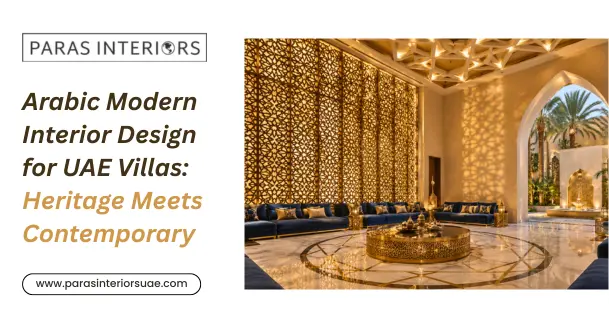
Arabic Modern Interior Design for UAE Villas: Heritage Meets Contemporary
In the heart of the United Arab Emirates, where centuries-old traditions converge with visionary ambition, a distinctive design aesthetic is flourishing. Arabic modern interior design for UAE villas represents far more than a decorative style—it’s a sophisticated dialogue between heritage and innovation, creating spaces that honor the past while embracing the future.
As a leading interior design company in Dubai, UAE, Paras Interiors UAE has had the privilege of crafting numerous Arabic modern villas throughout Dubai, Sharjah, and beyond. This comprehensive guide explores how contemporary design principles can beautifully integrate with Islamic architectural heritage to create villa interiors that are both culturally resonant and thoroughly modern.
Understanding Arabic Modern Interior Design: A Philosophy of Cultural Continuity
Arabic modern interior design isn’t simply about adding decorative elements from Islamic architecture to contemporary spaces. It represents a thoughtful synthesis that respects cultural identity while meeting the functional demands of 21st-century living.
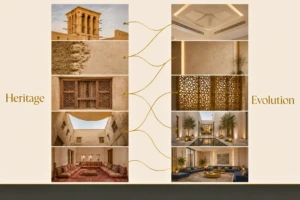
The Core Philosophy
Cultural Authenticity Without Nostalgia: Arabic modern design draws from genuine architectural and decorative traditions rather than creating pastiche or theme-park interpretations. It asks: “How would traditional Arabic architecture evolve if it continued developing with contemporary materials and lifestyles?”
Substance Over Superficiality: Rather than applying Islamic patterns as wallpaper or adding random geometric screens, authentic Arabic modern design integrates heritage elements structurally and meaningfully—through spatial organization, light manipulation, material selection, and functional design.
Contemporary Comfort with Traditional Values: Modern Arabic interiors accommodate today’s technology, open-plan preferences, and international aesthetics while respecting privacy hierarchies, hospitality traditions, and family-centered living that define Emirati culture.
Regional Specificity: UAE Arabic modern design references local architectural traditions—the wind towers of Dubai’s Al Fahidi district, the coral-stone construction of coastal settlements, the courtyard houses of inland communities—rather than generic “Islamic” aesthetics borrowed from Morocco, Andalusia, or Persia.
Historical Context: UAE Architectural Heritage
Understanding Arabic modern design requires appreciating the UAE’s rich architectural history:
Traditional Emirati Architecture featured:
- Courtyard houses: Central open spaces providing privacy, natural cooling, and family gathering
- Wind towers (barjeel): Ingenious passive cooling systems directing breezes into interiors
- Coral stone and gypsum: Local materials creating thick, insulating walls
- Mashrabiya screens: Intricate wooden lattices providing privacy, light filtration, and ventilation
- Majlis spaces: Dedicated reception areas separating public hospitality from private family life
- Arched openings: Structural and aesthetic elements creating flow between spaces
- Geometric patterns: Mathematical precision creating infinite patterns symbolizing divine order
Modern Evolution: Today’s Arabic modern design reinterprets these elements through contemporary materials, construction techniques, and spatial concepts, creating continuity between past and present.
Key Elements of Arabic Modern Interior Design
Successful Arabic modern villa interiors integrate heritage elements thoughtfully and selectively. Here are the signature features:
1. Mashrabiya: The Iconic Lattice Screen Reimagined
The mashrabiya—traditional wooden lattice screens—stands as perhaps the most recognizable element of Islamic architecture. In modern interpretations:
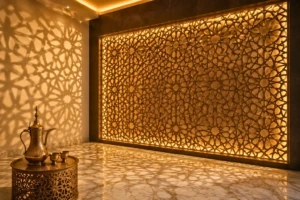
Traditional Function: Mashrabiya served multiple purposes:
- Providing privacy while allowing occupants to observe street life
- Filtering harsh sunlight while permitting air circulation
- Cooling incoming breezes through evaporative jars placed in openings
- Creating beautiful light patterns through geometric perforations
Contemporary Applications:
Exterior Facades: Modern mashrabiya screens in laser-cut metal, CNC-milled wood, or sculptural GRC (glass-reinforced concrete) create dramatic building exteriors while providing sun shading and privacy.
Interior Partitions: Use mashrabiya-inspired screens to:
- Separate formal majlis from family areas without solid walls
- Create privacy in open-plan layouts
- Define dining zones while maintaining visual connection
- Frame stairwells with artistic three-dimensional screens
- Enclose entertainment units or storage while adding decorative interest
Decorative Panels: Feature mashrabiya as:
- Illuminated wall art with LED backlighting
- Headboard designs in master suites
- Cabinet door inserts combining closed and open storage
- Ceiling installations creating patterned shadows
Material Innovation: Contemporary mashrabiya employs:
- Laser-cut brass or bronze for luxurious warmth
- Powder-coated aluminum for durability and color options
- CNC-routed MDF or solid wood for cost-effective applications
- Backlit acrylic or resin for glowing, translucent effects
- 3D-printed components for complex geometries
Design Tip: Use mashrabiya selectively as focal points rather than overwhelming spaces. One stunning illuminated screen makes more impact than multiple small applications.
2. Geometric Patterns: Islamic Mathematical Beauty
Islamic art’s prohibition on representational imagery led to extraordinary development of geometric pattern-making, creating designs of stunning complexity and spiritual significance.
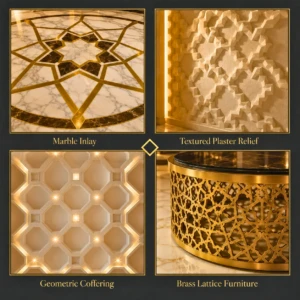
Traditional Significance: Geometric patterns represent:
- Divine order and infinite creation
- Mathematical precision and harmony
- Unity and diversity (complex patterns from simple base forms)
- Contemplative beauty encouraging reflection
Contemporary Integration:
Flooring:
- Marble or terrazzo inlays creating subtle geometric medallions
- Patterned tile zones defining entry areas or prayer spaces
- Wood parquet in Islamic star patterns
- Contemporary interpretations in oversized geometric tiles
Wall Treatments:
- 3D textured plaster or GRC panels with geometric relief
- Wallpaper featuring modernized Islamic patterns in monochromatic schemes
- Tiled accent walls in geometric arrangements
- Metal wall sculptures based on Islamic geometry
Ceiling Design:
- Coffered ceilings incorporating geometric divisions
- Recessed lighting creating star patterns
- Decorative plasterwork in traditional muqarnas (stalactite) forms updated with clean lines
- Suspended ceiling elements echoing dome geometry
Furnishings and Accessories:
- Upholstery fabrics with subtle geometric weaves
- Laser-cut metal tables or room dividers
- Geometric tile work on console tables or mirrors
- Lighting fixtures featuring pattern-inspired metalwork
Color Approach: Modern interpretations often employ geometric patterns in:
- Tone-on-tone applications (white on white, cream on beige)
- Metallic accents (brass patterns on neutral backgrounds)
- Restrained color palettes (navy and gold, emerald and cream)
- Natural material variations (different wood tones, stone colors)
This creates sophistication without visual chaos—patterns present but not dominating.
3. Arched Doorways and Openings: Architectural Grace
The arch stands as a defining feature of Islamic architecture, both structurally significant and aesthetically powerful.
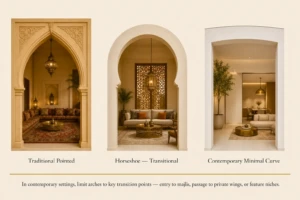
Traditional Forms:
- Pointed arches (common in mosques and grand buildings)
- Horseshoe arches (wider than their base)
- Multi-foil arches (with multiple curves)
- Ogee arches (S-shaped curves)
Modern Villa Applications:
Architectural Integration:
- Arched doorways between formal and informal spaces
- Arched niches displaying artwork or decorative objects
- Arched windows with contemporary minimal frames
- Arched ceiling details defining zones in open plans
Simplified Interpretations:
- Gentle curves rather than dramatic pointed arches
- Clean plaster surfaces instead of ornate decoration
- Integrated lighting within arch details
- Oversized proportions for contemporary drama
Material Expression:
- Natural stone surrounds highlighting arch forms
- Contrasting colors emphasizing architectural lines
- Brass or bronze inlays outlining curves
- Textured plaster creating subtle dimensional interest
Design Tip: In contemporary settings, limit arches to key transition points—entry to majlis, passage to private wings, or feature niches—rather than using throughout, which can feel theme-heavy.
4. Arabic Calligraphy: Sacred Art and Contemporary Expression
Arabic calligraphy transforms written language into visual art, with centuries of tradition producing numerous elegant scripts.
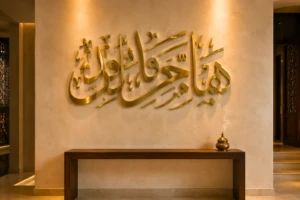
Modern Integration Approaches:
Wall Art:
- Large-scale canvas or metal wall pieces featuring Quranic verses or poetry
- Minimalist black-on-white calligraphy in contemporary frames
- Three-dimensional sculptural letters
- Illuminated LED calligraphy installations
Architectural Elements:
- Calligraphy incorporated into mashrabiya patterns
- Verses integrated into ceiling design
- Engraved or inlaid flooring near entry areas
- Glass partitions with etched calligraphic designs
Decorative Objects:
- Contemporary sculpture featuring Arabic letterforms
- Table lamps with calligraphic perforation patterns
- Throw pillows with embroidered or printed script
- Serving pieces and tableware with calligraphic motifs
Selecting Calligraphy: When incorporating religious texts:
- Choose meaningful verses relevant to home and family
- Consult with cultural advisors for appropriate placement
- Ensure proper orientation and respect for sacred content
- Consider commissioning custom calligraphy from traditional artists
Secular Options: For less formal applications, consider:
- Arabic poetry celebrating beauty, home, or family
- Proverbs and wisdom sayings
- Family names or meaningful words (peace, blessing, home)
- Contemporary abstract compositions inspired by letterforms
5. Lighting: Creating Atmospheric Brilliance
Traditional Arabic architecture mastered light manipulation through mashrabiya screens, colored glass, and strategic openings. Modern interpretations continue this tradition:
Pendant Lighting:
- Moroccan-inspired lanterns in contemporary materials (brushed brass, matte black)
- Geometric metal chandeliers with LED integration
- Clustered pendant arrangements creating sculptural installations
- Statement pieces in double-height spaces
Ambient Lighting:
- Concealed LED strips highlighting architectural details
- Cove lighting emphasizing ceiling geometry
- Uplighting arched niches or alcoves
- Backlit mashrabiya screens creating dramatic patterns
Decorative Fixtures:
- Contemporary interpretations of traditional lanterns
- Crystal and brass combinations for formal spaces
- Geometric wall sconces flanking mirrors or artwork
- Floor lamps with perforated metal shades creating pattern play
Natural Light Control:
- Mashrabiya screens filtering intense UAE sunlight
- Colored glass inserts in windows (subtle blues, ambers, or contemporary neutral tones)
- Strategically positioned openings creating light throughout the day
- Courtyard designs bringing light deep into villa plans
Material Palette: Crafting Luxury with Cultural Resonance
Material selection profoundly impacts Arabic modern interiors’ authenticity and atmosphere:
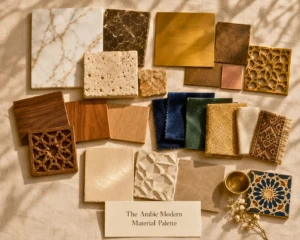
Marble: Timeless Luxury and Regional Tradition
Marble features prominently in both traditional Islamic architecture and contemporary UAE luxury design:
Applications:
- Flooring throughout formal areas (often in large-format slabs)
- Feature walls in majlis, entry halls, or dining rooms
- Bathroom surfaces including vanities, flooring, and wall cladding
- Decorative inlays and geometric patterns
- Fireplace surrounds and architectural details
Types Suitable for Arabic Modern:
- White Calacatta or Statuario: Dramatic veining on bright white base—pure, luxurious
- Cream Marfil: Warm, neutral elegance without stark contrast
- Emperador: Rich browns adding warmth to formal spaces
- Travertine: Textured surface referencing historical stone construction
- Local UAE stones: Contemporary use of regional geological materials
Design Approach:
- Use book-matched slabs for symmetrical, dramatic feature walls
- Combine different marbles in geometric floor patterns
- Balance cool white marbles with warm wood tones
- Specify honed or leather finishes for subtle sophistication versus high-polish shine
Brass and Bronze: Warm Metallic Accents
Metalwork has long featured in Islamic decorative arts, from intricate brass trays to monumental bronze doors. Contemporary applications include:
Architectural Details:
- Brass inlays in marble flooring
- Bronze door handles, hinges, and hardware
- Metal trim defining arches or niches
- Brass strips separating different flooring materials
Decorative Elements:
- Brass-framed mirrors and artwork
- Metal coffee tables with geometric bases
- Brass pendant lights and chandeliers
- Decorative trays, bowls, and accessories
Finishes:
- Brushed or satin brass (sophisticated, not shiny)
- Antique brass (aged patina for depth)
- Rose gold (contemporary warmth)
- Bronze (deeper, more grounded than brass)
Balance: Use brass as accent rather than dominant material—too much can overwhelm. Pair with neutral backgrounds and natural materials.
Warm Woods: Natural Beauty and Crafted Detail
Wood brings essential warmth to Arabic modern interiors, balancing cool marble and preventing sterile atmosphics:
Applications:
- Flooring in private family areas (bedrooms, informal living)
- Mashrabiya screens and partition elements
- Custom carpentry and built-in cabinetry
- Furniture including dining tables, consoles, and storage
- Decorative ceiling details and beams
- Door and window frames
Preferred Wood Types:
- Walnut: Rich, dark tones with beautiful grain
- Teak: Durable, warm honey tones
- Oak: Versatile, available in various finishes
- Mahogany: Traditional luxury with reddish warmth
Finishing:
- Natural oils and waxes highlighting grain
- Matte or satin finishes (avoiding high-gloss)
- Hand-rubbed techniques for artisanal quality
- Inlays of brass or mother-of-pearl for decorative accent
Textured Plaster: Artisanal Wall Surfaces
Traditional Arabic architecture featured intricate plasterwork, from delicate muqarnas vaulting to geometric relief panels. Modern interpretations include:
Applications:
- Feature walls in entry halls or formal spaces
- Fireplace surrounds and architectural niches
- Ceiling details and decorative coffers
- Textural backgrounds for artwork or screens
Techniques:
- Tadelakt: Moroccan polished plaster with subtle texture and soft sheen
- Venetian plaster: Italian technique creating marble-like depth
- Textured finishes: Hand-troweled surfaces adding dimension
- Geometric relief: Three-dimensional patterns in modern interpretations
Color Palette:
- Warm whites and creams
- Soft beiges and taupes
- Natural clay and earth tones
- Subtle metallic washes (gold, copper)
Textiles: Layering Comfort and Pattern
Fabrics introduce softness, color, and traditional pattern-making to Arabic modern spaces:
Upholstery:
- Rich velvets in jewel tones (deep blues, emeralds, burgundy)
- Silk blends with subtle sheen
- Textured linens and cottons in neutral bases
- Leather (rich browns, camels) for masculine spaces
Window Treatments:
- Layered curtains (sheer and opaque)
- Heavy fabrics in formal spaces for luxury and light control
- Geometric or subtle patterns referencing Islamic design
- Brass or decorative rods with traditional finial shapes
Decorative Textiles:
- Cushions mixing solid velvets with patterned geometric fabrics
- Throws in natural fibers or luxurious textures
- Area rugs—both traditional Persian/Turkish and contemporary geometric designs
- Table linens for formal dining
Color Strategy:
- Rich accent colors (sapphire, emerald, ruby, gold) against neutral backgrounds
- Tone-on-tone layering for sophisticated restraint
- Strategic pattern mixing (geometric with solid, scale variation)
- Metallic threads adding subtle glamour
Privacy Design in Arabic Villa Planning: Honoring Cultural Values
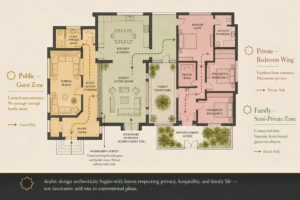
One of the most significant aspects of authentic Arabic modern design involves spatial organization respecting traditional privacy hierarchies and gender-separated hospitality.
The Traditional Arabic Home Layout
Historical Emirati homes featured clear separation between:
Public/Guest Zones:
- Majlis (reception room): Formal space for receiving guests, conducting business, and social gatherings
- Often located near entrance for guest access without traversing family areas
- Traditionally gender-separated (men’s and women’s majlis in larger homes)
Private/Family Zones:
- Living areas, bedrooms, and informal spaces reserved for family
- Kitchen and domestic areas (though this has evolved significantly)
- Protected from guest view for privacy and family comfort
Modern Villa Interpretations
Contemporary Arabic modern villas adapt these principles while accommodating modern lifestyles:
Entry Sequences:
- Formal entry foyer providing buffer between outside and interior
- Clear circulation to majlis without passing family areas
- Secondary family entrance for daily use
- Visual screening (mashrabiya, partial walls, strategic placement) protecting private spaces from guest view
Majlis Design:
- Dedicated formal reception room near entrance
- Separate from daily family living room
- Often featuring most elaborate Arabic design elements
- Can close off from rest of home when not entertaining
- Modern homes may include one flexible majlis rather than gender-separated spaces
- Connected to powder room for guest convenience
For detailed majlis design guidance, explore our specialized majlis interior design Dubai services.
Family Living Zones:
- Informal living, dining, and kitchen form connected family hub
- Located in private wing separate from formal areas
- Direct access to outdoor family spaces (pools, gardens, terraces)
- More relaxed design aesthetic compared to formal zones
Bedroom Wings:
- Master suite with private sitting area, often in separate wing
- Children’s bedrooms grouped together
- Guest bedrooms positioned for privacy from family areas
- Prayer rooms or dedicated spaces for spiritual practice
Outdoor Spaces:
- Private family courtyards or gardens (continuing courtyard house tradition)
- Formal entry courtyards making arrival statements
- Separate outdoor entertaining areas for guests
- Screened outdoor spaces for female family members
Modern Flexibility:
Contemporary UAE families often prefer flexible arrangements over strict separation, but the underlying principle of privacy options remains important. Design should allow both integration and separation as needed.
Avoiding Cliché: Creating Authentic Arabic Modern Design
The line between culturally resonant design and theme-park pastiche requires careful navigation. Here’s how to create substance over superficial ornament:
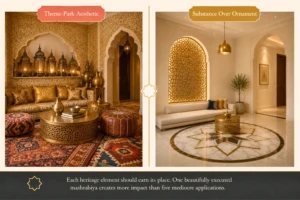
What to Avoid
Tourist Trap Aesthetics:
- Excessive lanterns covering every surface
- Random “Islamic” patterns without cultural context
- Mixing incompatible regional styles (Moroccan + Persian + Turkish = confusion)
- Obvious theme-restaurant atmosphere
- Gold everything (restraint creates luxury; excess creates kitsch)
Superficial Application:
- Geometric wallpaper as only “Arabic” element
- Single mashrabiya screen in otherwise generic contemporary space
- Arabic accessories without architectural integration
- Instagram-friendly photo-ops lacking genuine design thoughtfulness
Historical Reproduction:
- Literal recreation of historical interiors
- Museum-quality “authenticity” unsuitable for daily living
- Rejection of contemporary comfort and technology
- Nostalgia over functional modern life
Principles of Authentic Design
- Start with Spatial Planning
Arabic design authenticity begins with layout respecting privacy, hospitality, and family life—not decorative add-ons to conventional plans. - Integrate Rather Than Apply
Heritage elements should be structural and integrated (arches, ceiling geometry, spatial organization) rather than surface decoration. - Edit Ruthlessly
Each heritage element should earn its place. One beautifully executed mashrabiya screen creates more impact than five mediocre applications. - Balance Heritage and Contemporary
Pair traditional elements with clean, contemporary design. A geometric marble floor looks stunning against simple white walls; against busy wallpaper, it becomes overwhelming. - Use Quality Materials Honestly
Real brass, solid wood, genuine marble, and artisanal plaster create authenticity; cheap imitations undermine cultural respect. - Consider Regional Specificity
Reference UAE and Gulf architectural traditions rather than borrowing from distant Islamic cultures with different histories and aesthetics. - Accommodate Modern Life
Technology, contemporary furniture, modern kitchens, and current lifestyles should coexist comfortably with heritage elements. - Respect Sacred Elements
When incorporating religious elements (Quranic verses, prayer spaces), ensure respectful treatment and appropriate placement.
The “Substance Over Ornament” Test
Before including any Arabic design element, ask:
- Does this serve a functional purpose (privacy, light control, spatial definition)?
- Is it integrated architecturally or applied superficially?
- Does it reference genuine regional tradition or generic “Islamic” imagery?
- Would the space feel incomplete without it, or is it decorative excess?
- Does it balance with contemporary elements, or dominate overwhelmingly?
If answers suggest superficial application, reconsider or redesign for better integration.
Arabic Modern Design Across Different Villa Zones
The level and type of Arabic design integration varies appropriately across different spaces:
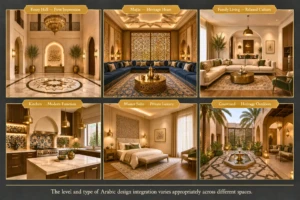
Entry Halls and Foyers: Making First Impressions
The entrance establishes tone and announces the home’s design character:
Design Elements:
- Dramatic marble or stone flooring (possibly with geometric inlay)
- Double-height ceilings with statement chandelier
- Arched doorways or niches
- Feature wall with textured plaster or mashrabiya screen
- Brass or bronze hardware and accents
- Minimal furniture (console table, statement artwork, perhaps seating)
Atmosphere: Formal, impressive, clearly establishing Arabic modern character while remaining welcoming.
Formal Majlis: The Heart of Arabic Villa Design
The majlis represents the most traditionally Arabic space, often featuring the strongest heritage elements:
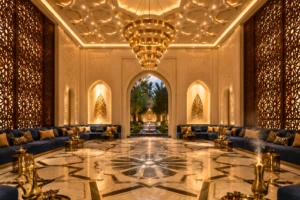
Layout:
- Perimeter seating arrangements (traditional floor cushions updated to low upholstered seating)
- Formal symmetry and balance
- Clear focal points (fireplace, feature wall, artwork)
- Connection to private garden or courtyard when possible
Design Features:
- Most elaborate ceiling treatment (geometric coffering, plasterwork)
- High-quality marble or patterned tile flooring
- Mashrabiya screens or geometric panels
- Arched openings and niches
- Statement lighting (chandelier or pendant cluster)
- Rich textiles in jewel tones
- Decorative objects (brass coffee pots, incense burners, calligraphy)
Contemporary Balance:
Modern majlis often include contemporary furniture alongside traditional elements, Western-style seating options, and technology integration (hidden speakers, climate control, smart lighting).
Family Living Areas: Relaxed Comfort with Cultural Continuity
Informal living spaces maintain Arabic character with more relaxed expression:
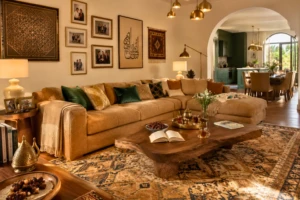
Design Approach:
- Warm wood flooring instead of formal marble
- Simplified geometric patterns in accessories rather than architecture
- Comfortable, contemporary furniture in warm tones
- Arched openings creating flow to dining or kitchen
- Less formal lighting (modern fixtures with subtle brass accents)
- Personal family photos and objects alongside decorative pieces
Atmosphere: Comfortable, livable, culturally grounded but not formal.
Kitchens: Modern Function with Heritage Accents
Contemporary kitchens prioritize function while incorporating subtle Arabic touches:
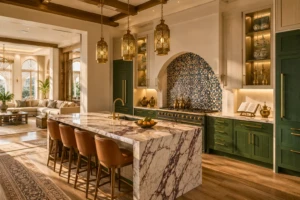
Design Elements:
- Geometric tile backsplashes in traditional patterns with modern color palettes
- Brass or bronze hardware and fixtures
- Marble or stone countertops
- Arched hood over range
- Glass-front cabinets displaying decorative ceramics or brassware
- Pendant lighting with geometric or lantern-inspired forms
Contemporary Integration:
- Latest appliances and technology
- Modern cabinet construction and layouts
- Open plan connection to family areas
- Clean, functional work zones
Master Suites: Private Luxury
Private bedrooms blend contemporary comfort with subtle heritage references:
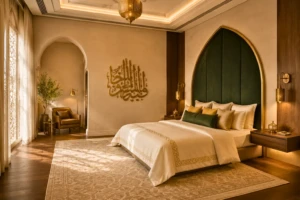
Bedroom Design:
- Upholstered bed with geometric or arched headboard
- Warm wood flooring or plush carpeting
- Subtle geometric patterns in textiles
- Brass or bronze lighting and hardware
- Arched alcoves for dressing areas or sitting spaces
- Calligraphy or geometric artwork
Master Bathrooms:
- Luxurious marble surfaces
- Geometric tile accents
- Brass or bronze fixtures and fittings
- Perhaps traditional hamam-inspired steam room
- Arched mirrors or niches
- Ambient lighting creating spa atmosphere
Outdoor Spaces: Extending Arabic Design Beyond Walls
Courtyards, terraces, and gardens continue Arabic design traditions outdoors:
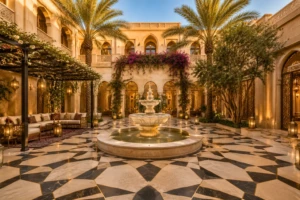
Courtyard Design:
- Central water features (fountains referencing traditional cooling systems)
- Geometric paving patterns
- Plantings including date palms, jasmine, and traditional Gulf species
- Covered seating areas (modern interpretations of traditional structures)
- Privacy screening using mashrabiya or planted walls
Terraces and Balconies:
- Brass or bronze railings with geometric patterns
- Patterned tile flooring
- Arched openings to interior spaces
- Lantern-style lighting
- Comfortable seating with weather-resistant fabrics in Arabic color palettes
Regional Variations: Dubai vs. Sharjah Villa Design
While sharing fundamental principles, Arabic modern design expresses differently across emirates:
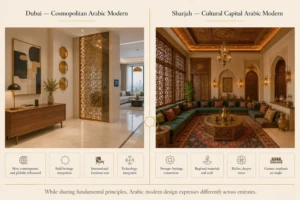
Dubai Villa Design
Dubai’s cosmopolitan character and international influences create Arabic modern design that’s:
Characteristics:
- More contemporary and globally influenced
- Bold, confident heritage integration
- Luxury materials and cutting-edge technology
- International furniture and contemporary art alongside Arabic elements
- Flexibility accommodating multicultural families
Typical Applications:
- Statement mashrabiya screens in contemporary materials
- Geometric patterns in sophisticated, minimalist color schemes
- Mix of Arabic architectural elements with Western furniture
- Technology-integrated smart homes with traditional aesthetics
Our villa interior design Dubai services reflect this cosmopolitan approach.
Sharjah Villa Design
Sharjah’s position as the UAE’s cultural capital and emphasis on heritage preservation creates:
Characteristics:
- Stronger connection to traditional Emirati architecture
- More consistent Arabic design language throughout
- Emphasis on cultural authenticity and regional specificity
- Traditional craftsmanship and artisanal details
- Often more conservative spatial planning with privacy emphasis
Typical Applications:
- More extensive use of traditional elements (arches, screens, plasterwork)
- Preference for regional materials and craftsmanship
- Traditional color palettes with deeper, richer tones
- Greater emphasis on majlis importance and separation from family areas
For Sharjah-specific expertise, explore our interior design Sharjah services.
Investment Considerations: Budgeting for Arabic Modern Villa Design
Quality Arabic modern design requires investment in craftsmanship and materials, but offers range depending on approach:
Budget-Conscious Approach (AED 300,000 – 500,000 for 4-5 bedroom villa)
Focus Areas:
- One showcase majlis with authentic Arabic design
- Entry hall making strong first impression
- Strategic use of geometric tiles in key bathrooms
- Contemporary furniture with Arabic-inspired accessories
- Standard marble selections with one feature application
- Brass hardware and lighting fixtures adding warmth throughout
Cost-Saving Strategies:
- MDF mashrabiya screens instead of custom metalwork
- Geometric wallpaper or stenciling instead of custom plasterwork
- Standard arch formations rather than complex curves
- Mix of ready-made and custom furniture
- Focus investment on visible public areas
Mid-Range Investment (AED 500,000 – 1,000,000 for 4-5 bedroom villa)
Enhancements:
- Custom mashrabiya metalwork or woodwork
- Quality marble selections with geometric inlays
- Textured plaster feature walls
- Comprehensive Arabic design in majlis and formal areas
- Custom brass lighting installations
- Architectural arches and ceiling details
- Blend of custom and designer furniture
- Quality textiles and traditional rugs
Impact: This range achieves authentic Arabic modern character throughout while balancing custom elements with strategic selections.
Premium Execution (AED 1,000,000 – 3,000,000+ for 4-5 bedroom villa)
Premium Features:
- Extensive custom architectural metalwork and screens
- Rare marble selections with complex inlay patterns
- Artisanal plaster craftsmanship throughout
- Custom-designed furniture and built-ins
- Commissioned calligraphy and artwork
- Elaborate ceiling treatments with geometric coffers
- Smart home integration within traditional aesthetics
- Landscape design extending Arabic character outdoors
- Museum-quality antique pieces or commissioned contemporary art
Result: Exceptional homes rivaling cultural institutions in execution quality while maintaining livability.
For detailed budget planning, consult our interior design cost Dubai guide.
Paras Interiors UAE Portfolio: Arabic Modern Excellence
At Paras Interiors UAE, we’ve developed deep expertise in creating authentic Arabic modern villas that honor heritage while embracing contemporary living. Our portfolio includes:
Dubai Projects
Emirates Hills Contemporary Arabic Villa:
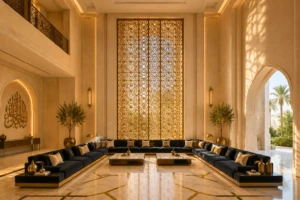
A 7-bedroom villa balancing bold geometric screen installations with minimalist contemporary interiors, featuring a double-height majlis with laser-cut brass mashrabiya and custom-designed furniture combining Emirati and Scandinavian influences.
Arabian Ranches Family Home:
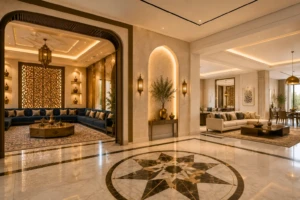
Traditional spatial planning with modern execution—separate formal majlis and family living areas, geometric marble flooring patterns throughout, and textured plaster feature walls creating warmth in contemporary open-plan spaces.
Palm Jumeirah Waterfront Villa:
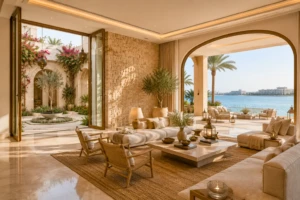
Coastal Arabic modern aesthetic incorporating natural stone, weathered brass elements, and arched openings framing water views, with interior courtyards bringing light deep into the villa plan.
Sharjah Projects
Al Majaz Heritage-Inspired Villa:
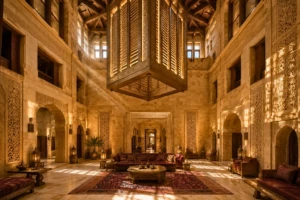
Deep connection to Emirati architectural traditions through extensive use of local stone, traditional wind tower-inspired ventilation systems updated with modern technology, and artisanal plasterwork by Gulf craftsmen.
Sharjah Waterfront Community Villa:
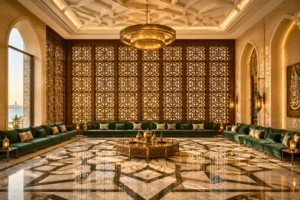
Sophisticated Arabic modern design featuring hand-carved wooden mashrabiya screens, geometric marble compositions referencing historic mosque patterns, and traditional majlis with contemporary luxury seating.
Al Zahia Family Villa:
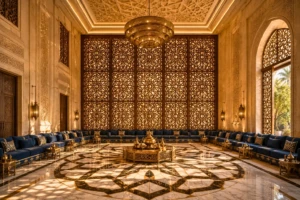
Multigenerational home with complex privacy planning, multiple majlis spaces for different family uses, and comprehensive Arabic design creating cultural continuity across generations.
Our Design Approach
Cultural Consultation: We work with cultural advisors, Emirati design consultants, and heritage specialists ensuring authentic, respectful integration of Islamic and Arabic design elements.
Artisan Collaboration: We partner with master craftsmen—metalworkers, plaster artisans, stone carvers, and calligraphers—maintaining traditional skills while executing contemporary visions.
Custom Solutions: Every project receives bespoke design tailored to family needs, site conditions, and cultural requirements rather than templated approaches.
Comprehensive Service: From initial concept through final styling, we manage complete villa transformations including architecture, interior design, landscape, and furnishing.
For comprehensive villa design services, explore residential interior design Dubai.
Arabic Modern Design Within Broader UAE Design Trends
Arabic modern villa design doesn’t exist in isolation—it connects to broader design evolution:
Heritage Renaissance
Across the UAE, growing appreciation for Emirati heritage, cultural preservation, and national identity fuels interest in architecture and design that expresses cultural roots while remaining thoroughly contemporary.
Luxury Redefined
UAE luxury increasingly means craftsmanship, authenticity, and cultural meaning rather than simply expensive materials—Arabic modern design delivers this evolved luxury.
Sustainability and Regional Appropriateness
Traditional Arabic architecture evolved specifically for Gulf climate conditions. Modern interpretations reviving passive cooling strategies, natural light manipulation, and regional materials align with sustainability goals.
Wellness and Mindfulness
Arabic design’s emphasis on courtyards, natural light, geometric harmony, and spaces supporting prayer and contemplation aligns with wellness-centered living.
To explore how Arabic modern design fits within broader trends, visit our interior design trends Dubai 2026 analysis.
Practical Implementation: Your Arabic Modern Villa Journey
Creating an authentic Arabic modern villa involves thoughtful process:
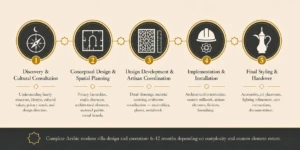
Phase 1: Discovery and Cultural Consultation
- Understand family structure, lifestyle, and hospitality patterns
- Discuss cultural values, privacy needs, and traditional elements importance
- Assess existing architecture and site conditions
- Review reference projects and establish design direction
- Determine budget parameters and phasing if needed
Phase 2: Conceptual Design and Spatial Planning
- Develop floor plans respecting privacy hierarchies and circulation
- Design majlis and formal spaces establishing Arabic character
- Plan architectural elements (arches, screens, ceiling details)
- Establish material palette and color direction
- Create mood boards and preliminary renderings
Phase 3: Design Development and Artisan Coordination
- Detail architectural elements and custom millwork
- Source materials (marble, brass, wood, textiles)
- Coordinate with craftsmen for custom elements (mashrabiya, plaster, metalwork)
- Select furniture, lighting, and accessories
- Refine drawings and specifications
Phase 4: Implementation and Installation
- Construct architectural modifications
- Install custom millwork and artisan elements
- Complete finishes and material applications
- Furnish and accessorize spaces
- Fine-tune lighting and technology
Phase 5: Final Styling and Handover
- Style spaces with final accessories and art
- Ensure proper care instructions for materials
- Provide comprehensive documentation
- Address any final adjustments
Timeline: Complete Arabic modern villa design and execution typically requires 6-12 months depending on complexity, custom element extent, and villa size.
Conclusion: Honoring the Past While Building the Future
Arabic modern interior design for UAE villas represents far more than an aesthetic choice-it’s a statement of cultural pride, a connection to heritage, and a bridge between generations. In a rapidly globalizing world, these homes remind us where we come from while confidently embracing where we’re going.
The most successful Arabic modern villas don’t recreate the past or reject tradition they evolve it. They ask: “How would our ancestors design if they had today’s materials, technology, and global influences?” The answer is spaces that feel simultaneously timeless and contemporary, rooted and innovative, specifically Emirati and universally beautiful.
Whether you’re building a new villa in Dubai’s contemporary communities or renovating a family home in Sharjah’s established neighborhoods, Arabic modern design offers a path to creating spaces that honor your heritage while serving your modern lifestyle.
At Paras Interiors UAE, we consider it a privilege to help families create homes that express cultural identity, support traditional values, and provide contemporary luxury. These aren’t just beautiful houses—they’re legacies being built for future generations, connecting past and future through thoughtful, authentic design.
Ready to create your Arabic modern villa?
Contact Paras Interiors UAE today to begin your journey toward a home that honors heritage while embracing the future. Our expert team combines deep cultural knowledge, design excellence, and comprehensive execution capabilities to bring your vision to life.
Frequently Asked Questions
Arabic modern interior design combines the timeless beauty of traditional Arabic architecture with contemporary design principles. It incorporates elements such as arches, mashrabiya screens, geometric patterns, natural materials, and luxurious finishes while maintaining clean lines, open layouts, and modern functionality.
Traditional Arabic interiors often feature ornate detailing, rich patterns, and handcrafted décor, while modern Arabic interiors simplify these elements with minimalist layouts, neutral color palettes, and contemporary furniture. The result is a space that feels elegant, functional, and culturally authentic.
Common features include:
- Spacious majlis areas
- Neutral and earth-toned color palettes
- Natural stone and wood finishes
- Arabic geometric patterns
- Mashrabiya-inspired screens
- Luxury lighting
- Custom joinery
- High ceilings
- Indoor-outdoor living spaces
- Bespoke decorative accents
Warm neutral shades such as sand, beige, ivory, cream, taupe, and soft white create the perfect foundation. These are often complemented with accents of emerald green, deep blue, terracotta, bronze, brass, or gold to reflect traditional Arabic elegance.
Arabic modern interiors frequently use premium natural materials such as marble, limestone, travertine, walnut, oak, brass, bronze, glass, handcrafted wood, textured plaster, and luxurious fabrics like linen, velvet, and silk to create timeless spaces.
A majlis is a traditional Arabic gathering space designed for welcoming guests and family gatherings. In modern UAE villas, the majlis remains a central feature, combining cultural heritage with contemporary comfort through elegant seating, premium materials, and refined lighting.
Yes. Arabic modern design is ideal for contemporary villas because it blends traditional cultural elements with modern architecture, creating homes that feel luxurious, functional, and connected to the UAE’s heritage without appearing overly traditional.
You can introduce Arabic heritage through features such as geometric wall panels, mashrabiya screens, decorative arches, Arabic calligraphy artwork, handcrafted furniture, brass lighting, natural stone finishes, and custom joinery while maintaining a clean and uncluttered overall design.
Absolutely. Arabic modern interior design is especially popular in luxury villas across Dubai and Abu Dhabi because it reflects local culture while offering sophisticated, contemporary living spaces tailored to modern lifestyles.
Layered lighting creates the best effect. Statement pendant lights, Arabic-inspired lanterns, concealed LED lighting, wall sconces, and warm ambient lighting enhance architectural features while creating an inviting atmosphere.
Yes. Modern Arabic interiors prioritize spacious layouts, durable materials, comfortable seating, and practical storage while preserving the hospitality and warmth that are central to Arabic culture, making them ideal for family homes.
The cost depends on factors such as villa size, level of customization, material selection, bespoke furniture, and luxury finishes. Premium Arabic modern villa interiors typically require a higher investment due to custom craftsmanship and high-quality materials.
Current trends include minimalist Arabic luxury, warm natural materials, sculptural arches, textured stone finishes, custom joinery, integrated smart home technology, sustainable materials, and subtle Islamic geometric patterns that complement contemporary architecture.
Yes. Smart lighting, automated climate control, motorized curtains, integrated security systems, and hidden entertainment solutions can all be seamlessly incorporated without compromising the timeless Arabic aesthetic.
An experienced interior designer can successfully balance traditional Arabic heritage with modern luxury, ensuring your villa reflects local culture, meets your lifestyle needs, optimizes space, and uses high-quality materials and bespoke detailing for a cohesive, timeless result.

Sandeep Joshi

As Marketing Manager at Paras Interiors UAE, I bring 10+ years of experience in brand strategy and digital marketing within the luxury interior design space. I craft impactful narratives that showcase our bespoke projects from elegant villas in Palm Jumeirah to premium commercial spaces in Downtown Dubai-highlighting the artistry and functionality that define our brand.