In Dubai’s fast-paced, luxury-driven landscape, a quiet design revolution is taking place. Amid the glittering chandeliers and maximalist marble palaces, a growing number of discerning homeowners are embracing something refreshingly different: Japandi interior design in the UAE, a sophisticated fusion of Japanese minimalism and Scandinavian warmth that’s perfectly suited to modern Dubai living.
As leading interior design specialists in Dubai, Paras Interiors UAE has witnessed the remarkable rise of Japandi style among the emirate’s cosmopolitan residents. This comprehensive guide explores why this tranquil aesthetic is capturing hearts across the UAE and how you can bring its serene beauty into your own home.
What Is Japandi Interior Design?
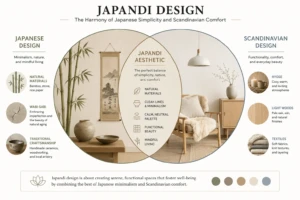
Japandi represents a harmonious marriage of two influential design philosophies: Japanese wabi-sabi and Scandinavian hygge.
The Japanese Influence: Wabi-Sabi
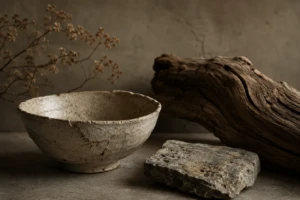
Japanese design philosophy centers on wabi-sabi, finding beauty in imperfection, impermanence, and incompleteness. It embraces:
- Simplicity and restraint: Removing the unnecessary to reveal the essential
- Natural materials: Celebrating the inherent beauty of wood, stone, paper, and clay
- Craftsmanship: Valuing handmade objects and artisanal quality
- Connection to nature: Bringing the outdoors in through materials and mindfulness
- Functional beauty: Every object serves a purpose while maintaining aesthetic integrity
- Imperfection: Appreciating the character of aged wood, hand-thrown ceramics, and natural variations
The Scandinavian Influence: Hygge
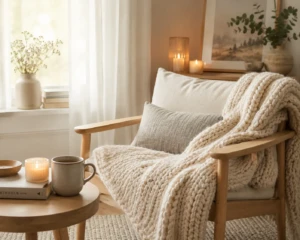
Scandinavian design contributes hygge, the Danish concept of cozy contentment and well-being. Key elements include:
- Warmth and comfort: Soft textiles, inviting spaces, and tactile materials
- Light and brightness: Maximizing natural light in northern climates
- Neutral color palettes: Whites, grays, and natural tones that create calm
- Functionality: Practical, multi-purpose furniture and clever storage solutions
- Organic forms: Gentle curves and flowing lines that feel approachable
- Community and connection: Spaces designed for gathering and togetherness
Japandi: The Perfect Fusion
When these two philosophies merge, Japandi emerges, a style that’s minimalist yet warm, functional yet beautiful, contemporary yet timeless. It features:
- Clean lines softened by organic shapes
- Neutral palettes warmed by natural wood tones
- Minimalist spaces enriched by carefully curated objects
- Sparse furnishings balanced by cozy textiles
- Modern functionality honoring traditional craftsmanship
- Zen tranquility combined with hygge comfort
The result is an aesthetic that feels both aspirational and livable, sophisticated and serene, qualities that resonate deeply with Dubai’s international community.
Why Japandi Interior Design Resonates with Dubai’s Expat Professional Market
Dubai attracts ambitious professionals from around the world, creating a unique demographic that finds particular appeal in Japandi design:
1. Antidote to Urban Intensity
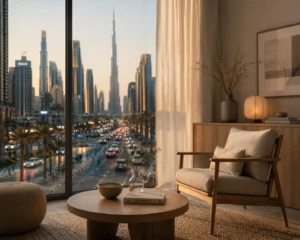
Dubai pulses with energy, its skyline constantly evolving, its streets always bustling, its lifestyle perpetually dynamic. For professionals navigating this high-stimulus environment, Japandi interiors offer a sanctuary of calm.
The style’s emphasis on minimalism, neutral tones, and uncluttered spaces creates visual rest that counterbalances the city’s sensory abundance. After navigating traffic, meetings, and the constant connectivity of modern work life, coming home interior design in dubai to a Japandi space feels like a deep exhale.
2. Global Aesthetic Appeal
Dubai’s expat community represents dozens of nationalities, each bringing different aesthetic traditions. Japandi’s universal design language, rooted in fundamental principles of beauty, function, and nature, transcends cultural boundaries.
Whether you’re from London, Mumbai, Sydney, or São Paulo, Japandi feels simultaneously familiar and fresh, making it an ideal choice for international professionals who may relocate again in the future.
3. Quality-Over-Quantity Philosophy
Japandi’s “less is more” ethos appeals to professionals who’ve moved internationally multiple times. Rather than accumulating possessions, the style encourages investing in fewer, higher-quality pieces that travel well and stand the test of time.
This mindset aligns perfectly with the expat experience of selective curation, keeping what truly matters and letting go of the rest.
4. Space Optimization for Apartment Living
Many Dubai professionals live in apartments where space comes at a premium. Japandi’s minimalist approach and multi-functional furniture solutions maximize every square meter without compromising on style or comfort.
For those in communities like JVC, Dubai Marina, or Downtown Dubai, Japandi transforms compact apartments into spacious-feeling retreats. Our apartment interior design Dubai services frequently incorporate Japandi principles for precisely this reason.
5. Low-Maintenance Lifestyle Compatibility
Busy professionals need homes that look beautiful without requiring constant upkeep. Japandi’s minimal ornamentation, durable natural materials, and clutter-free approach create spaces that maintain their beauty with minimal effort.
Unlike high-maintenance luxury styles requiring regular polishing, detailed cleaning, and careful preservation, Japandi materials like oak, linen, and stone actually improve with age and wear.
6. Wellness and Mindfulness Alignment
Dubai’s wellness-conscious professionals increasingly prioritize mental health, mindfulness, and work-life balance. Japandi design supports these values through:
- Uncluttered spaces that reduce visual stress
- Natural materials that ground and center
- Thoughtful layouts encouraging mindful living
- Connection to nature through biophilic elements
- Spaces conducive to meditation, yoga, and relaxation
7. Instagram-Worthy Without Being Ostentatious
In Dubai’s image-conscious culture, Japandi offers a sophisticated alternative to obvious luxury. It photographs beautifully for social media while projecting refined taste rather than flashy wealth, appealing to professionals building personal brands based on substance and authenticity.
8. Investment Value
Quality Japandi furniture and finishes maintain value well, with timeless pieces from brands like Muji, HAY, and Japanese craftsmen becoming more desirable over time. For expats who may eventually ship belongings elsewhere, this matters.
The Japandi Palette: Creating Serene Harmony Through Color and Material
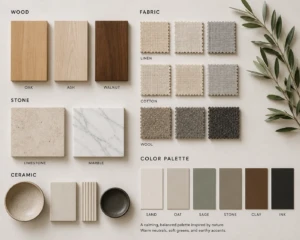
Japandi’s distinctive aesthetic emerges from a carefully considered palette of colors, materials, and textures:
Color Palette
Foundation Neutrals:
- Warm whites and off-whites (cream, ivory, bone)
- Soft grays (greige, dove, warm gray)
- Beiges and taupes (sand, linen, mushroom)
- Natural clay and terracotta tones
Wood Tones:
- Light woods: Oak, ash, maple, birch
- Medium woods: Walnut, teak, cedar
- Warm undertones that add coziness to minimalism
Accent Colors (used sparingly):
- Muted greens: Sage, moss, olive
- Earthy blues: Dusty blue, slate, denim
- Warm terracottas and rust
- Deep charcoal or black for grounding contrast
The overall effect should be a monochromatic, tonal landscape where colors flow seamlessly rather than creating stark contrasts. This creates visual calm and allows textures and forms to take center stage.
Natural Wood: The Heart of Japandi
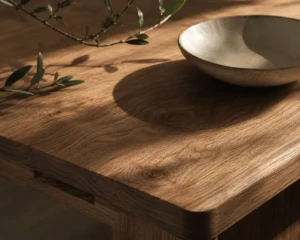
Wood serves as Japandi’s signature material, bringing warmth, texture, and organic beauty to minimalist spaces:
Applications:
- Flooring: Wide-plank oak or ash in natural or light finishes
- Furniture: Clean-lined tables, bed frames, shelving, and seating
- Architectural details: Wood-slatted screens, ceiling beams, wall paneling
- Accessories: Trays, bowls, cutting boards, decorative objects
- Japanese Wood Traditions: Emphasize grain patterns, joinery craftsmanship, and reverence for the material’s natural character.
- Scandinavian Wood Approach: Features light finishes, smooth surfaces, and functional, sculptural forms.
When these traditions merge in Japandi, you get furniture that showcases beautiful grain while maintaining clean, functional lines, with wood celebrated both for its utility and its inherent beauty.
Linen and Natural Textiles

Textiles add essential warmth and tactility to Japandi’s minimalist framework:
Key Fabrics:
- Linen: The quintessential Japandi fabric, breathable, textured, ages beautifully
- Cotton: Natural, soft, available in organic options
- Wool: Adds warmth through throws, rugs, and upholstery
- Hemp and Jute: Earthy textures for rugs and decorative elements
- Silk: Occasional luxury in cushions or window treatments
Applications:
- Bedding in natural linen or organic cotton
- Curtains in light, flowing linen that filters Dubai’s intense sunlight
- Upholstery in neutral, durable natural fabrics
- Throws and cushions adding layers of texture
- Area rugs in wool, jute, or cotton
The textures should be visible and touchable: linen’s subtle wrinkles, wool’s soft nap, and jute’s organic weave, creating sensory richness within visual simplicity.
Stone and Ceramic Elements
Stone and ceramics ground Japandi spaces with earthy, elemental beauty:
Stone Applications:
- Bathroom surfaces in limestone, marble, or terrazzo
- Kitchen countertops in matte-finished stone
- Decorative objects and sculptures
- Flooring accents or feature walls
Ceramic and Pottery:
- Handmade vases, bowls, and vessels
- Artisanal tableware showcasing craftsmanship
- Decorative objects with organic glazes and imperfect forms
- Bathroom fixtures in matte ceramic finishes
Choose pieces that celebrate the maker’s hand, slight variations, visible brush strokes, and organic forms embodying wabi-sabi’s appreciation for imperfection.
Metal Accents
Metals appear sparingly in Japandi design, providing subtle contrast and functional details:
Preferred Finishes:
- Matte black: Cabinet hardware, light fixtures, frames
- Brushed brass or bronze: Warm metallic accents
- Brushed stainless steel: For kitchen applications
- Blackened or oxidized metals: For character and depth
Avoid shiny chrome, polished gold, or reflective finishes that feel too contemporary or luxurious; Japandi metals should be understated and matte.
Furniture Sourcing: Finding Japanese-Inspired Pieces in the UAE
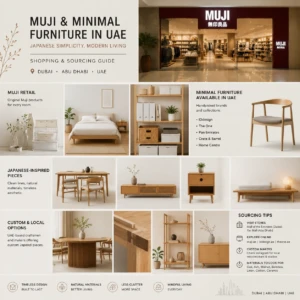
Creating an authentic Japandi interior in Dubai requires sourcing furniture that embodies the style’s core principles. Fortunately, the UAE market now offers numerous options:
International Brands Available in Dubai
- Muji: The Japanese retailer with Dubai Mall and Mall of the Emirates locations offers quintessential Japandi furniture, storage solutions, and home accessories at accessible price points.
- IKEA: While Scandinavian rather than Japanese, IKEA’s minimalist collections like LISABO, Stockholm, and RÅSKOG align beautifully with Japandi aesthetics.
- BoConcept: Danish furniture with clean lines and quality craftsmanship, available at Dubai and Abu Dhabi showrooms.
- HAY: Contemporary Danish design brand offering furniture and accessories that complement Japandi interiors.
UAE-Based Retailers and Craftsmen
- The Bowery Company: Dubai-based furniture store offering minimalist, Scandinavian-inspired pieces.
- TANDEM: Dubai Design District showroom featuring contemporary furniture with clean aesthetics.
- 2XL Furniture & Home Décor: Multiple UAE locations carrying modern, minimalist furniture options.
- Crate and Barrel: Mid-century modern and contemporary pieces that work within Japandi schemes.
- Custom Carpentry: Dubai’s numerous bespoke furniture makers can create Japanese-inspired pieces to exact specifications particularly valuable for built-in storage and tailored solutions.
Online Options Serving the UAE
- Ebarza: UAE-based online furniture retailer offering contemporary minimalist collections.
- The Bowery Company Online: Ships throughout the UAE with Japandi-appropriate selections.
- Danube Home: Affordable furniture options including minimalist pieces.
- International Shipping: Many expats successfully order from European retailers or Japanese brands and ship to Dubai, particularly for signature investment pieces.
What to Look for When Selecting Japandi Furniture
- Clean Lines: Furniture should feature straight lines or gentle curves without excessive ornamentation.
- Quality Construction: Look for solid wood, proper joinery, and durable craftsmanship rather than veneers or particle board.
- Functional Design: Every piece should serve a clear purpose, ideally with multi-functional capabilities.
- Low Profiles: Japanese design traditionally features low furniture, low beds, low seating, and low tables, creating horizontal visual calm.
- Natural Materials: Prioritize wood, natural fibers, stone, and ceramics over synthetics or heavily processed materials.
- Neutral Tones: Select pieces in natural wood finishes or neutral upholstery that integrate seamlessly into the Japandi palette.
- Visible Craftsmanship: Joinery details, wood grain, and construction quality should be apparent and celebrated rather than hidden.
How to Create Japandi Style in a Small Dubai Apartment
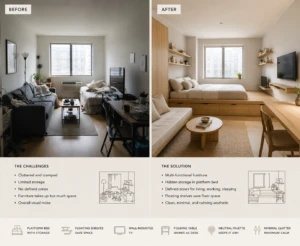
Dubai’s apartment dwellers face unique spatial challenges that Japandi design is uniquely equipped to address:
Space Planning Principles
Remove Visual Clutter: In small apartments, every visible item competes for attention. Japandi’s minimalism creates visual breathing room that makes spaces feel significantly larger.
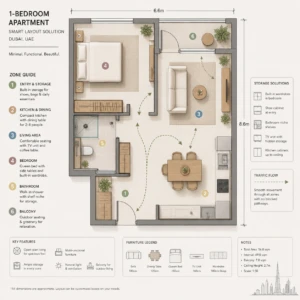
Multi-Functional Furniture: Invest in pieces that serve multiple purposes:
- Sofa beds for guest accommodation
- Ottoman storage for hiding items
- Nesting tables that expand when needed
- Fold-down dining tables
- Murphy beds for studio efficiency
Vertical Thinking: Use wall-mounted shelving, tall storage units, and vertical space to keep floors clear and sightlines open.
Hidden Storage: Japandi embraces concealed storage, closed cabinets, under-bed drawers, and built-in solutions, keeping possessions organized but out of sight.
Small Apartment Japandi Strategies
Living Areas:
- Choose a low-profile sofa in neutral linen or cotton
- Replace bulky coffee tables with sleek wooden benches or Japanese-style chabudai (low tables)
- Mount TV on wall to free floor space
- Use floating shelves instead of bookcases
- Add floor cushions for flexible seating that stores easily
Bedrooms:
- Select platform beds with built-in storage
- Keep nightstands minimal or wall-mounted
- Use wardrobes with sliding doors to save swing space
- Layer neutral linens for hotel-like simplicity
- Limit decorative objects to one or two meaningful pieces
Kitchens:
- Embrace open shelving to display minimal, beautiful essentials
- Choose handleless cabinets in wood or matte finishes
- Keep countertops completely clear except during cooking
- Store appliances in dedicated cabinets
- Display handmade ceramics as both function and art
Bathrooms:
- Install floating vanities to maintain floor visibility
- Choose matte black or brass fixtures
- Use natural stone or wood-look tiles
- Keep products in matching, minimal containers
- Add a single plant or wooden stool as décor
General Tips:
- Paint walls in warm white or soft gray to maximize light reflection
- Choose light wood flooring to keep spaces bright
- Use sheer linen curtains that provide privacy while admitting light
- Limit each room to 1-2 accent colors
- Apply the “one in, one out” rule to prevent accumulation
Recommended Apartment Communities for Japandi Style
Certain Dubai communities particularly suit Japandi aesthetics due to their contemporary architecture and expat demographics.
- JVC (Jumeirah Village Circle): Modern apartments with good natural light, perfect for Japandi transformation. Explore our specialized interior design JVC Dubai services.
- Dubai Marina: Sleek high-rise living that pairs beautifully with minimalist interiors
- Downtown Dubai: Contemporary apartments benefiting from uncluttered Japandi calm
- Business Bay: Professional interior design company business bay appreciate Japandi’s sophisticated simplicity
- Bluewaters Island: Modern buildings where Japandi feels naturally at home
Creating Japandi Style in a Large Dubai Villa
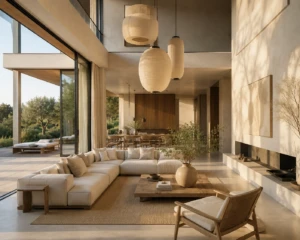
While Japandi excels in compact spaces, it adapts beautifully to larger villas with thoughtful application:
Avoiding Empty Minimalism
Large spaces risk feeling cold or empty with strict minimalism. Combat this through:
Layered Textures: Compensate for fewer objects with richer textural variety, chunky knit throws, linen upholstery, jute rugs, wood grain, and stone surfaces.
Scaled Furnishings: Larger rooms need appropriately sized furniture. Avoid filling space with quantity; instead, choose larger-scale quality pieces.
Architectural Interest: Use wood paneling, exposed beams, or Japanese-inspired screens to add visual interest without clutter.
Zoned Spaces: Create distinct areas within large rooms, reading nooks, conversation groupings, and workspace corners, each with purpose and definition.
Villa-Specific Japandi Elements
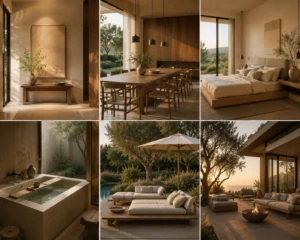
Grand Entryways: Create impact through:
- Statement wood feature walls
- Minimalist console tables with single sculptural objects
- Large-scale artwork in muted tones
- Japanese-inspired pendant lighting
- Built-in seating with storage
Living Rooms: Scale up thoughtfully:
- Sectional sofas in neutral linen anchor spaces
- Oversized wood coffee tables become sculptural centerpieces
- Floor-to-ceiling sheer curtains soften large windows
- Large area rugs in natural fibers define seating zones
- Statement lighting like oversized paper lanterns
Dining Areas: Embrace Japanese entertaining traditions:
- Substantial wood dining tables showcasing grain and craftsmanship
- Mix seating styles (benches plus chairs) for visual interest
- Minimal table settings with handmade ceramics
- Open shelving displaying beautiful essentials
- Large-scale botanical artwork or photography
Master Suites: Create spa-like sanctuaries:
- Platform beds with upholstered headboards in natural linen
- Dedicated sitting areas with low seating
- Japanese soaking tubs in en-suites
- Walk-in closets with minimalist organization systems
- Private balconies with simple outdoor furniture
Outdoor Spaces: Extend Japandi principles outdoors:
- Japanese-inspired gardens with gravel, stepping stones, and minimal plantings
- Teak or cedar outdoor furniture with clean lines
- Neutral outdoor cushions and textiles
- Stone water features
- Screened areas creating indoor-outdoor transitions
Home Offices: Professional spaces need Japandi’s focused calm:
- Substantial wood desks with minimal surface items
- Ergonomic seating in neutral fabrics
- Built-in shelving with closed storage for clutter
- Large windows or biophilic elements for connection to nature
- Quality task lighting with minimal design
Connecting Japandi with Dubai’s Climate
Natural Light Management: Dubai’s intense sunlight requires thoughtful window treatments. Use:
- Sheer linen curtains for soft light diffusion
- Wooden blinds or shoji-inspired screens
- Light-colored walls and furnishings to reflect rather than absorb heat
Indoor-Outdoor Integration: Where climate allows (winter months), blur boundaries through:
- Large sliding glass doors
- Consistent flooring materials inside and out
- Covered outdoor living areas with Japandi furniture
- Potted plants that migrate between spaces
Temperature Comfort: Counter air conditioning’s dryness through:
- Natural fiber textiles that breathe
- Humidifying plants
- Wood surfaces that feel warm to touch
- Layered textiles for temperature adjustment
Cost-Effective Japandi Execution Tips for UAE Homes
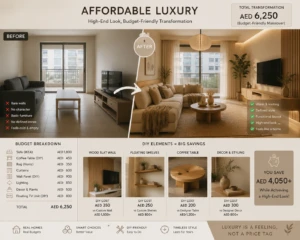
Creating beautiful Japandi interiors doesn’t require unlimited budgets. Strategic approaches make the style accessible:
Start with Painting and Decluttering (AED 2,000-5,000)
The most transformative, and affordable, Japandi intervention costs almost nothing:
- Declutter Ruthlessly: Remove 50% or more of visible objects. This alone transforms spaces toward Japandi aesthetics.
- Paint in Neutral Tones: Repaint walls in warm white (try Benjamin Moore’s Swiss Coffee or Simply White) or soft greige. This creates the perfect Japandi backdrop.
- Immediate Impact: These two steps alone will shift your space dramatically toward Japandi for minimal investment.
Invest in Key Furniture Pieces (AED 5,000-15,000)
Rather than replacing everything, prioritize hero pieces:
Primary Sofa: A quality neutral sofa in linen or cotton becomes your living room foundation (AED 3,000-8,000 for quality options from 2XL, Danube Home, or The Bowery Company).
Dining Table: A solid wood table with beautiful grain serves for years (AED 2,000-7,000 depending on size and wood type).
Bed Frame: A low-profile platform bed in wood or upholstered neutral fabric (AED 1,500-5,000).
These three pieces establish Japandi character, while other items can be gradually upgraded.
DIY and Upcycling
Paint Existing Furniture: Transform dark wood or colorful pieces with white, gray, or natural wood-tone stains.
Replace Hardware: Swap ornate handles for simple matte black or brass pulls (AED 200-500 for the whole home).
Reupholster: Give existing seating new life with neutral linen or cotton fabric (typically AED 500-1,500 per piece in Dubai).
Create Art: Frame botanical prints, abstract photography, or simple calligraphy in minimalist frames.
Smart Shopping Strategies
Muji for Essentials: Stock up on storage, organizational items, and accessories at Muji’s accessible price points.
IKEA Foundation: Use IKEA for secondary pieces, storage solutions, and basics, upgrading key items over time.
Dragon Mart: Find affordable basics, neutral textiles, and simple furnishings to supplement higher-quality investment pieces.
End-of-Season Sales: Dubai’s furniture retailers offer significant discounts during DSF (Dubai Shopping Festival) and DSS (Dubai Summer Surprises).
Facebook Marketplace and Dubizzle: Expats leaving Dubai often sell quality furniture at a fraction of the retail cost, look for Scandinavian or minimalist pieces.
Prioritize Quality Over Quantity
Remember: Japandi philosophy values fewer, better things. Rather than filling your home with affordable pieces, buy one quality item and live with empty space until you can afford the next right piece.
A single beautiful solid wood coffee table makes more impact than five mediocre pieces filling the same room.
Phased Implementation
Phase 1 (AED 3,000-5,000): Declutter, paint, new window treatments, key textiles (rugs, throws, cushions)
Phase 2 (AED 5,000-10,000): Primary seating, dining table, or bed frame
Phase 3 (AED 5,000-15,000): Secondary furniture, lighting upgrades, artwork, remaining pieces
Phase 4 (AED 10,000+): Custom built-ins, high-end pieces, architectural modifications
This approach makes Japandi accessible while maintaining design integrity. For detailed budgeting guidance, consult our interior design cost Dubai resource.
Integrating Biophilic Elements into Japandi Interiors
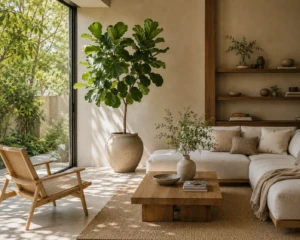
Both Japanese and Scandinavian design traditions deeply value nature connection, making biophilic design a natural Japandi companion:
Plant Selection for Japandi Spaces
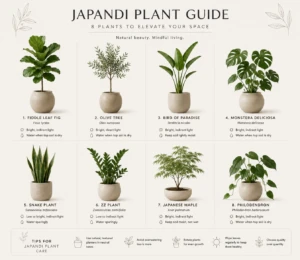
Choose plants with sculptural forms and minimal care requirements:
Statement Plants:
- Fiddle leaf fig: Architectural leaves in minimal planters
- Snake plant: Vertical, structural, extremely low-maintenance
- Monstera deliciosa: Organic, dramatic foliage
- Bamboo: Cultural resonance and clean vertical lines
Smaller Plants:
- Pothos: Trailing greenery for shelves
- ZZ plant: Glossy, modern appearance
- Peace lily: Elegant white blooms
- Succulents: Minimal water needs for busy lifestyles
Styling Principles:
- Use simple ceramic or concrete planters in neutral tones
- Group in odd numbers (1, 3, 5) rather than even
- Display on wood stands, shelving, or floors rather than cluttering surfaces
- Choose quality over quantity, one perfect plant beats five mediocre ones
Natural Materials as Biophilic Elements
Japandi’s emphasis on wood, stone, and natural fibers inherently creates a biophilic connection. Maximize this through:
- Visible wood grain that showcases organic patterns
- Stone surfaces with natural variation and texture
- Natural fiber rugs that reference organic origins
- Materials that age beautifully, showing life’s passage
Light and Air
- Maximize natural light with minimal window treatments
- Create cross-ventilation when weather permits
- Position seating near windows for view connections
- Use mirrors to reflect natural light deeper into spaces
For comprehensive guidance on nature integration, explore our biophilic interior design Dubai services.
Common Japandi Design Mistakes to Avoid in Dubai Homes
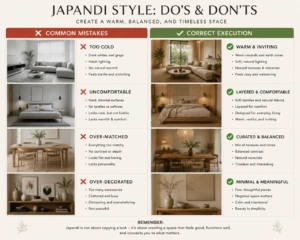
While creating Japandi interiors, watch for these common pitfalls:
1. Confusing Minimalism with Emptiness
The Mistake: Removing so much that spaces feel cold, unwelcoming, or unfinished.
The Solution: Japandi should feel serene but lived-in. Include warmth through textiles, personal objects (sparingly), and human touches. A home should reflect inhabitants, not resemble a showroom.
2. Ignoring Comfort for Aesthetics
The Mistake: Choosing furniture that looks right but feels uncomfortable.
The Solution: Hygge demands comfort. Test seating thoroughly. Add cushions and throws. Ensure beds are luxuriously comfortable. Japandi should feel like the most comfortable place you’ve ever lived.
3. Going Too Monochromatic
The Mistake: Creating spaces where everything blends into monotonous sameness.
The Solution: Vary tones within the neutral palette. Mix warm and cool neutrals. Include blacks and deep woods for grounding contrast. Add texture to create visual interest without color.
4. Overlooking Storage
The Mistake: Achieving initial minimalism that becomes impossible to maintain without adequate storage.
The Solution: Design comprehensive storage solutions first, then decorate. Built-ins, concealed cabinets, and multi-functional furniture make minimalism sustainable.
5. Buying Everything New and Matching
The Mistake: Purchasing complete furniture sets that feel showroom-generic.
The Solution: Mix sources, eras, and styles within the Japandi framework. Combine vintage finds with new pieces. Include handmade items alongside mass-produced ones. This creates authentic, collected-over-time character.
6. Forgetting Personal Expression
The Mistake: Creating magazine-perfect spaces lacking personality or meaning.
The Solution: Display meaningful objects, travel souvenirs, inherited pieces, artwork you love. Japandi isn’t about sterility; it’s about intentionality. Each displayed item should be there for a reason.
7. Wrong Scale for Space
The Mistake: Tiny furniture in large villas or oversized pieces cramming small apartments.
The Solution: Furniture scale must match room proportions. In small apartments, choose appropriately sized pieces. In large villas, don’t be afraid of substantial furniture.
Japandi as Part of Broader Dubai Interior Trends
Japandi doesn’t exist in isolation, it’s part of broader shifts in Dubai interior design:
Shift Toward Wellness-Centered Design
Dubai residents increasingly prioritize mental health, mindfulness, and work-life balance. Japandi’s calm aesthetics, natural materials, and uncluttered spaces directly support these wellness goals.
Movement Away from Obvious Luxury
While Dubai remains a luxury market, there’s growing appreciation for understated sophistication over flashy displays. Japandi represents refined taste, quality craftsmanship, and timeless desig, a different expression of luxury than gold fixtures and crystal chandeliers.
Sustainability and Conscious Consumption
Japandi’s emphasis on quality over quantity, natural materials, and longevity aligns with growing environmental consciousness. Choosing fewer, better pieces that last decades represents a more sustainable approach than fast-furniture trends.
Global Aesthetic for International Communities
As Dubai becomes increasingly cosmopolitan, universal design languages that transcend specific cultural aesthetics gain appeal. Japandi’s fusion of Eastern and Western traditions creates common ground for diverse residents.
To explore how Japandi fits within broader design evolution, visit our interior design trends Dubai 2026 analysis.
How Paras Interiors UAE Brings Japandi Design to Life
At Paras Interiors UAE, we’ve developed deep expertise in creating authentic Japandi interiors tailored to Dubai’s unique context:
Our Japandi Design Approach
- Understanding Your Lifestyle: We begin by learning how you live, work patterns, entertaining habits, storage needs, and comfort preferences, ensuring Japandi aesthetics serve your practical reality.
- Space Assessment: We evaluate your space’s natural light, proportions, architectural features, and constraints, identifying opportunities for Japandi transformation.
- Customized Design Strategy: Rather than applying formulaic Japandi templates, we develop personalized design strategies that reflect your style within Japandi principles.
- Material Sourcing: We leverage relationships with UAE suppliers, international brands, and custom craftsmen to source authentic Japandi furnishings and materials.
- Phased Implementation: We can design complete transformations or phased approaches that fit your budget and timeline.
- Integration with Dubai Living: We understand UAE-specific considerations, climate management, cultural context, and expat lifestyle needs, ensuring Japandi design works practically in Dubai homes.
Why Choose Paras Interiors UAE for Japandi Design?
- Specialized Expertise: Our designers study both Japanese and Scandinavian design traditions, creating authentic fusion rather than superficial interpretation.
- Dubai Experience: We understand the local market, supplier landscape, and cultural context that shapes successful Dubai interiors.
- Holistic Service: From initial concept through final installation, we provide comprehensive support for your Japandi journey.
- Quality Focus: We prioritize craftsmanship, natural materials, and timeless design that aligns with Japandi philosophy.
- Personalization: Your Japandi interior will reflect your individual personality and needs, not generic magazine aesthetics.
Conclusion: Finding Minimalist Harmony in Maximalist Dubai
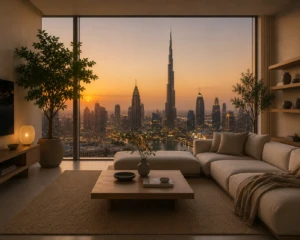
In a city famous for “bigger, taller, more,” Japandi offers something refreshingly different, proof that luxury can be quiet, sophistication can be simple, and beauty can be found in restraint.
Whether you’re transforming a compact JVC apartment or a sprawling Emirates Hills villa, Japandi interior design creates spaces that feel like sanctuaries from Dubai’s intensity homes that calm rather than stimulate, that center rather than distract, that honor quality over quantity.
The fusion of Japanese wabi-sabi and Scandinavian hygge isn’t just an aesthetic choice; it’s a lifestyle decision. It’s choosing mindful curation over mindless accumulation, timeless design over trendy decoration, and meaningful simplicity over complicated excess.
For Dubai’s international professionals seeking balance, beauty, and belonging in this desert metropolis, Japandi offers a path home to spaces that feel simultaneously sophisticated and serene, global and grounded, minimal and meaningful.
Ready to create your Japandi sanctuary in Dubai? Contact Paras Interiors UAE today to explore how we can bring minimalist harmony to your home. Our expert team is ready to transform your space into a tranquil retreat that honors both Japanese and Scandinavian design traditions while embracing the unique possibilities of Dubai living.